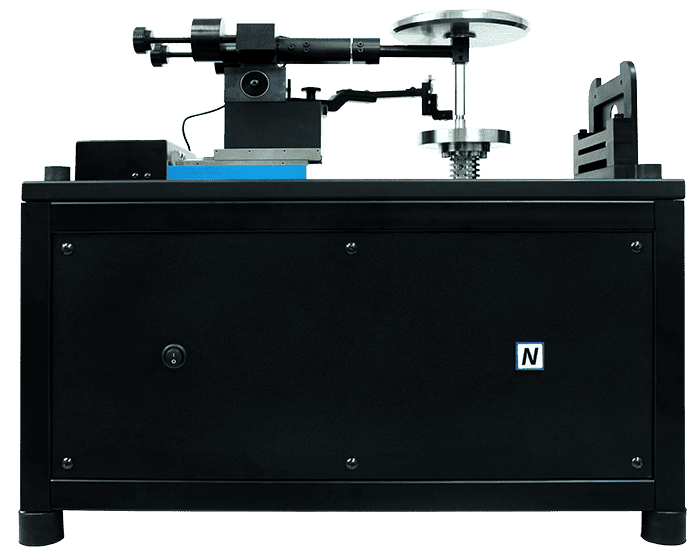
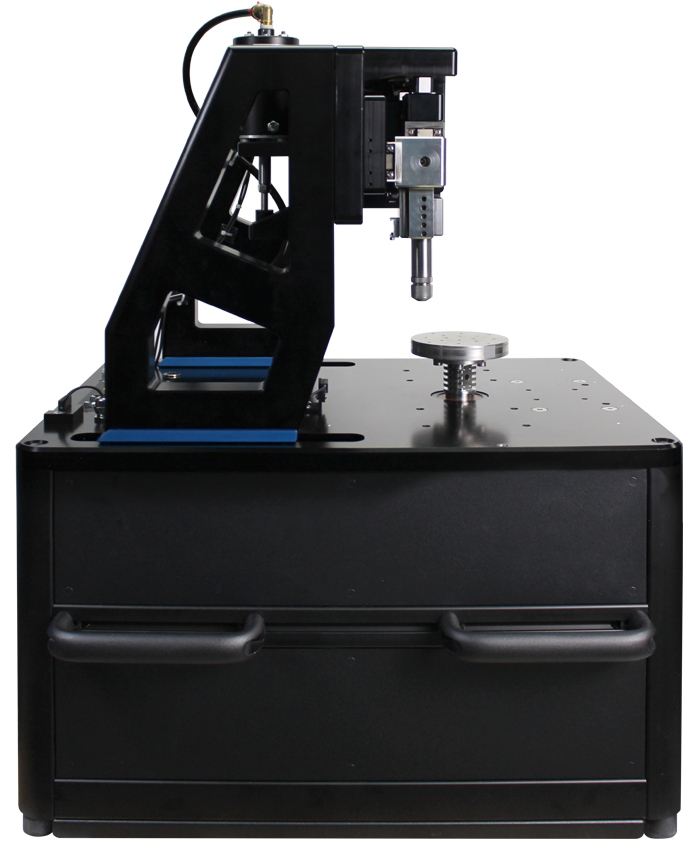
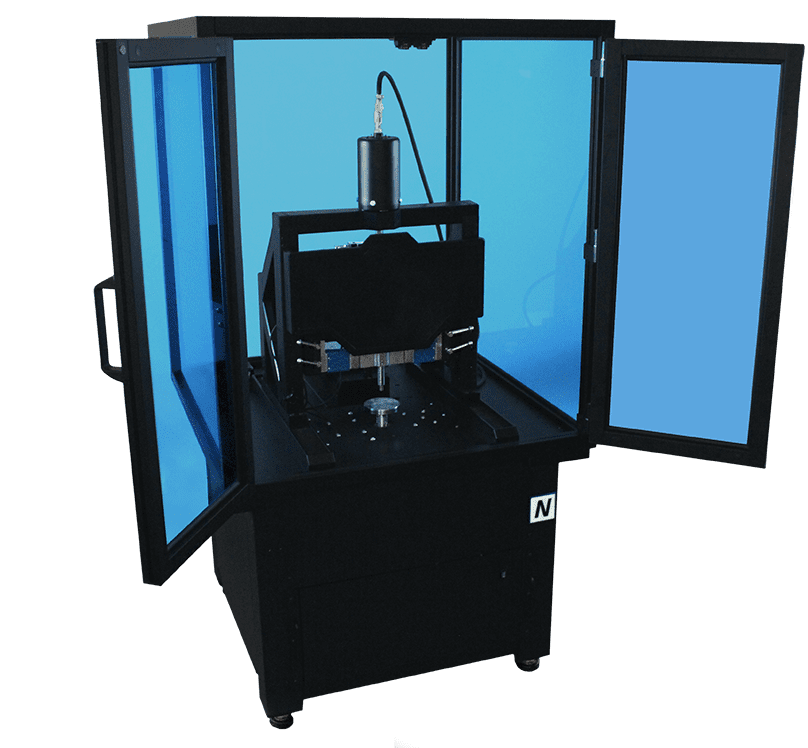
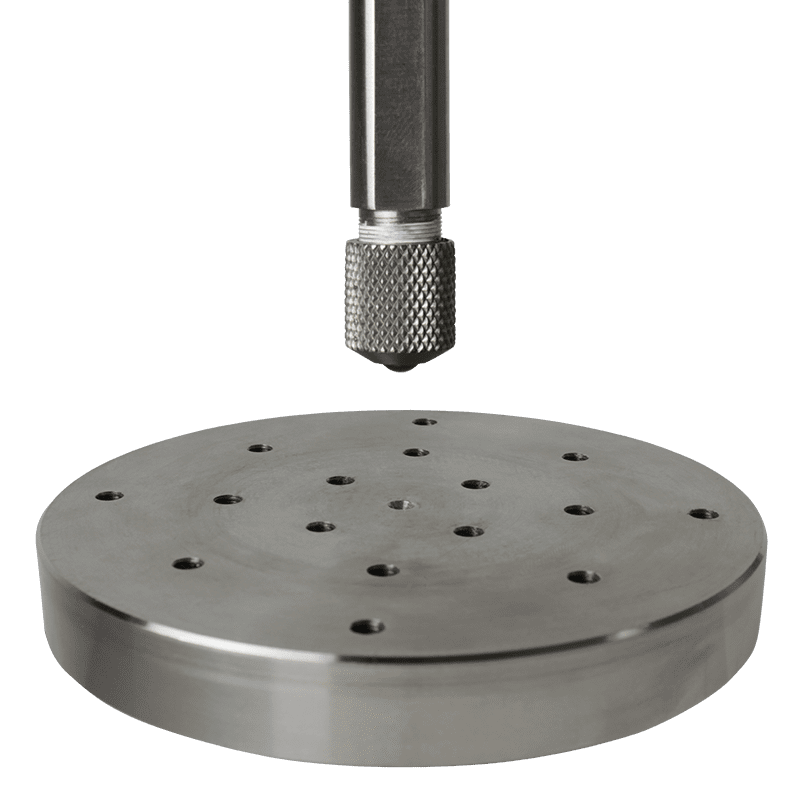
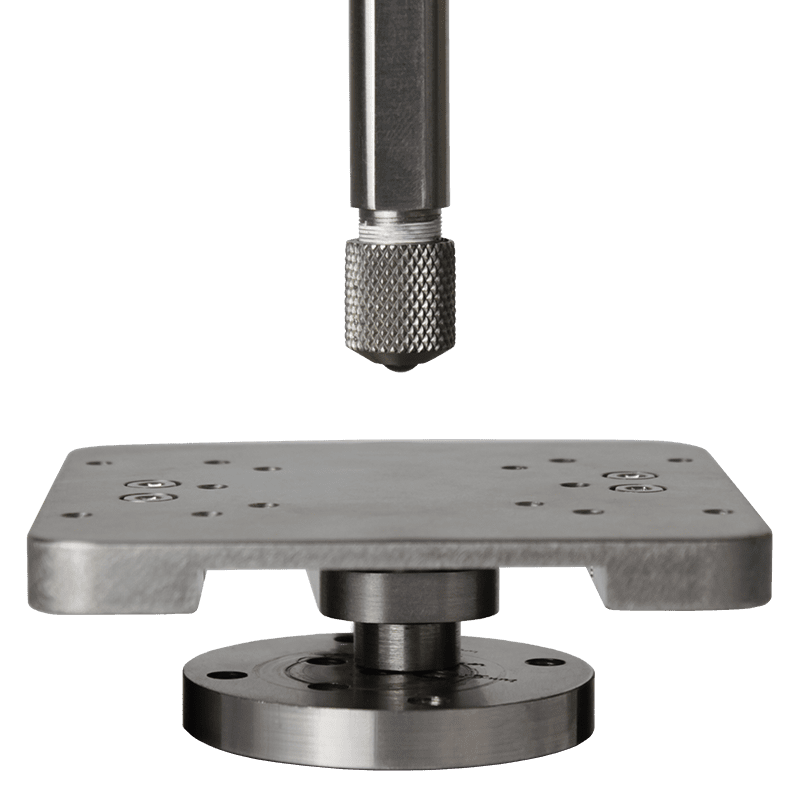
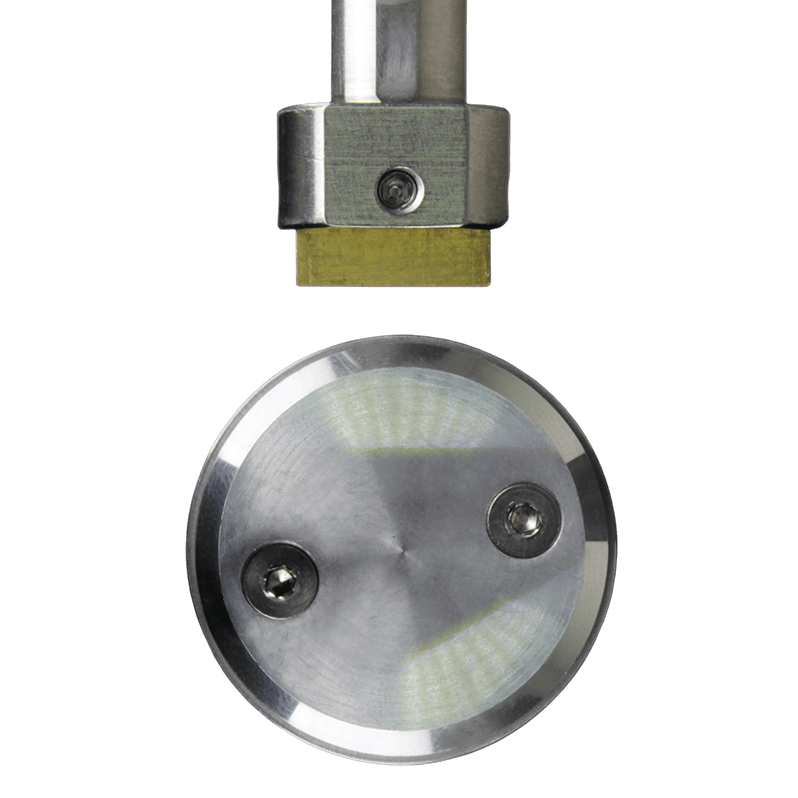
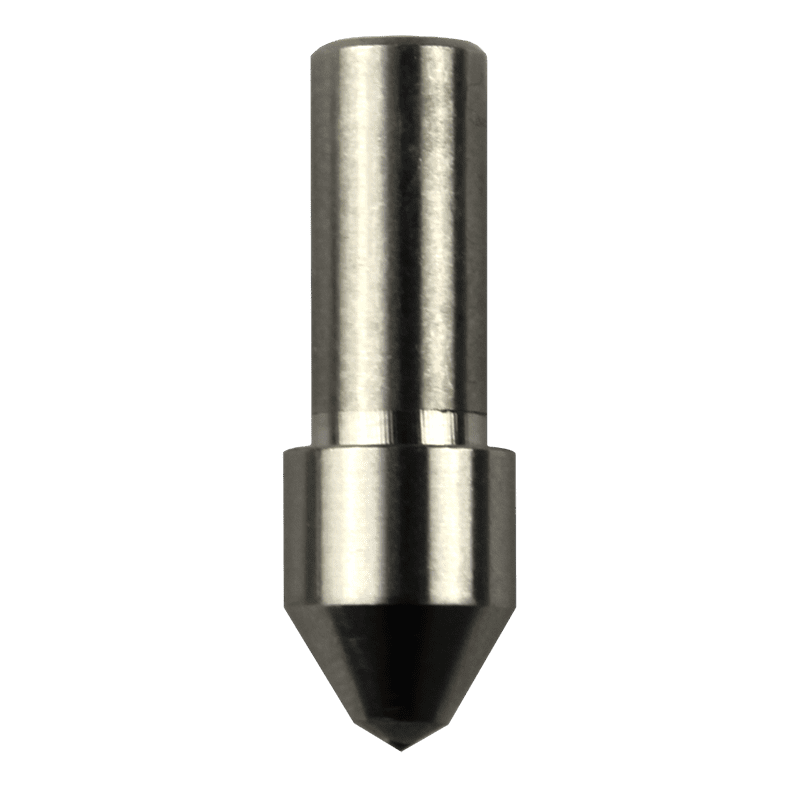
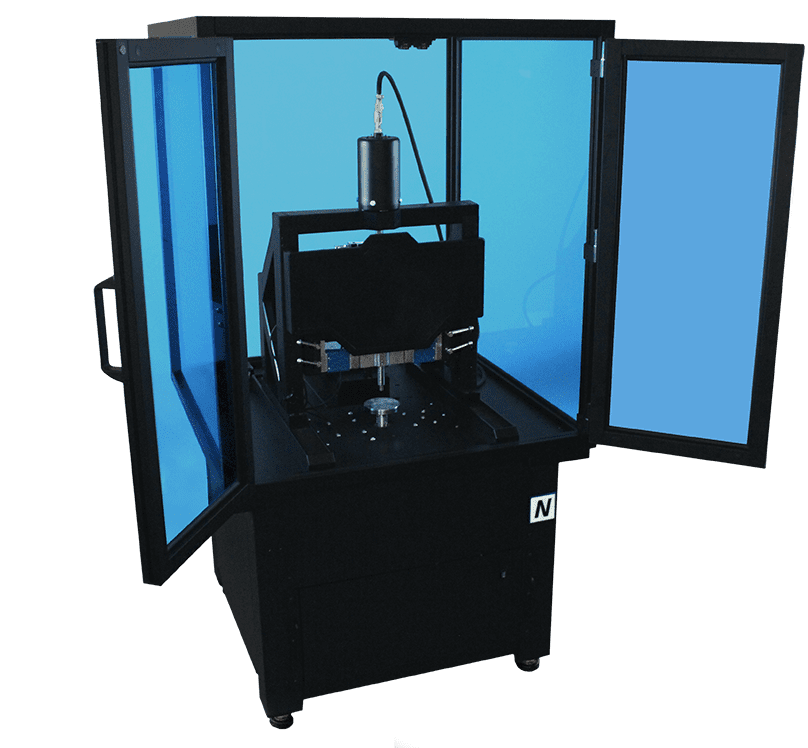
TRIBOMETERS INTRO Highly advanced Tribometer offers precise and repeatable wear/friction Tribology testing. Designed to allow pin-on-disk(standard) and linear reciprocating (optional) testing on the same system. The highly advanced motor gives an unmatched range of rpm speeds and high position accuracy with a 20bit encoder. The motor can move in both directions opening the door to arc reciprocating testing. Equipped with a self tuning feature to keep system in check through time. System is delivered with speeds from 0.1 to 2000rpm (6000rpm optional). Comes standard with motorized radius control and capability to measure torque variation during testing. Friction force is measured directly with a stiff high resolution load cell.
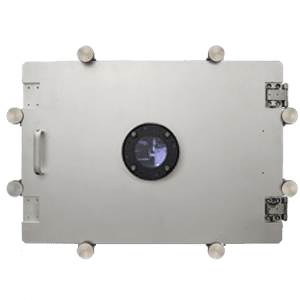
Plexiglas enclosure with integrated valve allows for controlled environment testing such as inert gases or certain humidity levels. Three high temperature options are available: up to 1000ºC oven for the pin-on-disk, 300ºC heating plate for the linear and a 150ºC liquid heating module. For high temperature testing, the arm is equipped with a motorized lift that automatically removes weight from sample surface allowing the sample to continue rotating during cool down without further wearing the surface. An RVDT sensor can also be added to measure total wear of ball and sample while tracking wear rate through time. A full range of optic imaging integration including Video Zoom Camera and 3D Optical Profiler modules are optional for fast and convenient wear analysis. Software automatically calculates wear rate for the samples tested. The 3D Optical Profiler can also be used to measure roughness, dimension, topography and full pre and post test area profile. Software allows users to easily control test parameters including: speed, frequency and test time. *For Tribometer specifications see brochure download. For Tribometer technical testing data see application notes. TRIBOMETERS |
|
![]() |
Pin-on-Disk (ASTM G99) Flat pin or sphere is loaded onto sample with precisely known weight which is applied to a stiff elastic arm. This ensures a nearly fixed contact point providing a stable position in the friction track. Friction coefficient is determined by measuring the deflection of the elastic arm. Wear rates for the pin and the disk are calculated from volume material loss. |
![]() |
Linear Reciprocating (ASTM G133) |
![]() |
High Temperature (1000 ºC) (Pin-On-Disk only) |
![]() |
Tri-Mode Lubrication System System offers the choice of three lubrication modes: 1) Using a low pressure pulverization module, air is compressed and filtered then mixed with liquid to create a uniform spray that can be directed to the appropriate test zone. 2) A drop by drop lubrication with flow control. 3) The soak option performs friction tests and wear tests under fluid in a specialized cup surrounding sample holder, allowing full submersion of the sample. |
| Liquid Heating Module (Below 150 ºC) Heating coil available to heat liquids to up to 150 ºC. This allows temperatures near 37ºC which are suitable for bio material studies of wear and friction properties under bodily fluid, such as those found in artificial joint applications. This range of temperatures is also ideal for study of oils. Humidity Control System A standard Plexiglas enclosure makes it possible to use specific salt baths to create various humidity atmospheres. A full humidity control system is available for applications requiring a higher level of control. This advanced option makes it possible to accurately control humidity levels, and includes a dehumidification and humidification apparatus in addition to the automatic humidity controller with sensor. Electrical Resistance Contact Detector This option detects the first sign of substrate exposure by measuring the electrical contact resistance during wear and friction test. This is especially useful in cases where an insulating coating is on top of a conductive substrate directed to the appropriate test zone. |
|
| TRIBOLOGY MEASUREMENT (Micro | Macro Pin On Disk-G99 and Linear Reciporcating-G133 ) Wear • Abrasion • Friction • Temperature control • Liquid control • Atmosphere control and others |
|||
![]() |
![]() |
![]() |
![]() |